
Project Planning & Risk Management
Lorem Ipsum is simply dummy text of the printing and typesetting industry. Lorem Ipsum has been the industry’s standard dummy text ever since the 1500s, when an unknown printer took a galley of type and scrambled it to make a type specimen book.
Overview
📊 Course Overview


The Project Planning & Risk Management course equips professionals with practical tools and methodologies to successfully plan, execute, monitor, and control projects while proactively identifying and managing risks.
This course integrates PMI-aligned best practices, real-world case studies, and hands-on workshops to help participants deliver projects on time, within budget, and with minimized uncertainty.
🎯 Learning Objectives
By the end of this course, participants will be able to:
-
Develop comprehensive project plans aligned with business goals
-
Define scope, deliverables, milestones, and schedules
-
Use project planning tools such as WBS, Gantt Charts, and Critical Path
-
Identify, analyze, and prioritize project risks
-
Apply qualitative and quantitative risk analysis techniques
-
Develop risk mitigation and response strategies
-
Monitor and control project performance effectively
-
Communicate project status and risk insights to stakeholders
👥 Target Audience
-
Project Managers & Team Leaders
-
Program Coordinators
-
Engineers & Technical Leads
-
Business Analysts
-
Operations & Planning Professionals
-
Anyone involved in project delivery
🧠 Prerequisites
-
Basic understanding of project environments (recommended)
-
No formal certification required
🗓️ Course Duration
3 to 5 Days (Customizable Delivery)
Available in Online Live Training or Offline Classroom Workshops
🗂️ Detailed Course Outline
Module 1 – Introduction to Project Planning
-
What is project planning?
-
Project lifecycle and governance
-
Aligning projects with organizational strategy
-
Roles and responsibilities in project planning
Module 2 – Defining Project Scope
-
Scope definition and scope statement
-
Requirements gathering techniques
-
Stakeholder identification and analysis
-
Avoiding scope creep
Workshop: Create a Project Charter
Module 3 – Work Breakdown Structure (WBS)
-
WBS development techniques
-
Deliverable-based planning
-
Responsibility Assignment Matrix (RACI)
-
Estimation methods
Workshop: Build a WBS for a real project
Module 4 – Project Scheduling & Timeline Development
-
Creating project schedules
-
Gantt charts and milestone planning
-
Critical Path Method (CPM)
-
Resource allocation and leveling
-
Schedule compression techniques
Workshop: Develop a project timeline
Module 5 – Budgeting & Cost Planning
-
Cost estimation techniques
-
Budget baseline creation
-
Cost control methods
-
Earned Value Management (EVM) basics
⚠️ Risk Management Section
Module 6 – Introduction to Risk Management
-
What is project risk?
-
Risk vs issue vs assumption
-
Risk management framework (PMI aligned)
Module 7 – Risk Identification
-
Risk identification techniques:
-
Brainstorming
-
SWOT Analysis
-
Delphi Technique
-
Checklists
-
-
Creating a Risk Register
Workshop: Identify risks for a sample project
Module 8 – Risk Analysis
-
Qualitative risk analysis (Probability & Impact Matrix)
-
Quantitative risk analysis overview
-
Risk prioritization
-
Risk scoring models
Workshop: Build a Risk Matrix
Module 9 – Risk Response Planning
-
Risk mitigation strategies:
-
Avoid
-
Transfer
-
Mitigate
-
Accept
-
-
Contingency planning
-
Risk ownership assignment
Workshop: Develop a Risk Response Plan
Module 10 – Risk Monitoring & Control
-
Risk tracking and reporting
-
Early warning indicators
-
Risk audits and reviews
-
Updating the risk register
📈 Project Execution & Monitoring
Module 11 – Project Monitoring & Performance Control
-
KPIs for project performance
-
Status tracking and dashboards
-
Change management processes
-
Managing stakeholder communication
Module 12 – Communication & Stakeholder Engagement
-
Communication planning
-
Managing expectations
-
Conflict resolution
-
Reporting techniques
Module 13 – Tools & Techniques for Project Planning
-
Using tools such as:
-
Microsoft Project
-
Excel Planning Templates
-
Agile boards (Kanban basics)
-
-
Hybrid project planning approaches
🧪 Capstone Exercise
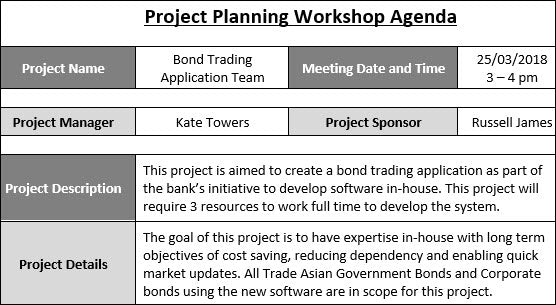


Participants will:
-
Develop a complete Project Plan
-
Create a Risk Management Strategy
-
Present project roadmap and mitigation approach
-
Receive instructor feedback
🏆 Skills Gained After Completion
Participants will gain the ability to:
-
Plan projects with confidence and structure
-
Identify risks early and manage uncertainty
-
Improve project success rates
-
Align planning with organizational strategy
-
Apply globally recognized project management practices
📌 Course Summary
| Feature | Details |
|---|---|
| Course Name | Project Planning & Risk Management |
| Duration | 3–5 Days |
| Mode | Online / Offline |
| Level | Beginner to Intermediate |
| Practical Workshops | Included |
| Methodology | PMI-Aligned |
Curriculum
Instructor

You May Like

From Zero to Hero with Nodejs
Build and deploy a few Nodejs, MongoDB & Expressjs apps while watching to lectures by the author of 9 books on JS/Node.

ITIL® 4 Foundation
Interchange now enables HTML partials for device specific content. Smoother animations and transitions happen with hardware acceleration. The default styles are all updated.

CISSP – Certified Information Systems Security Professional
Less is a CSS pre-processor, meaning that it extends the CSS language, adding features that allow variables, mixins, functions and many other techniques that allow...
Course Features
- Lecture 0
- Quiz 0
- Duration 69 hours
- Skill level All levels
- Language English
- Students 50
- Assessments Yes